
Claude Code Is Secure. Is What You’re Building With It?
Other tools catch CVEs and flag insecure dependencies. But they can’t tell you whether your application is actually secure for what it’s supposed to do. Trent gives you contextual security assessments directly inside Claude Code.
The Gap Between “No Known Vulnerabilities” and “Secure by Design”
Developers building with Claude Code want to move fast without leaving their coding environment. Low-level scanners are already helping catching CVEs, flagging insecure dependencies, spotting known code patterns. But that’s not the same as understanding whether your entire application is actually secure.

Low-level scanners don’t tell you what the real security threats to your application are, how to think about them in context of your unique business, or how to design and build against the security requirements that result from your business requirements. You end up with a list of code-level findings but no view of the bigger picture.

Too many findings slow sprints and miss OKRs. Security issues discovered late force the entire roadmap on hold. The real cost is the rework.

AI agents are adding attack surface that your existing tools can’t see. They weren’t designed for prompt-driven logic, agent-to-agent communication, or the emergent behaviors that arise when autonomous components interact.
Security Assessments That Understand Your Application, Not Just Your Code.
Through an MCP connection, Trent’s security agents analyze your codebase in context: not just what the code does, but what the application is, how it’s architected, and where the real security threats live. They assess those threats against your application’s specific risk profile, distinguishing between low-level code findings and the security requirements that actually matter for your product.
Trent’s agents scan your codebase, identify security threats relevant to your application’s architecture and business context.

They assess those threats against your application’s specific risk profile, distinguishing between low-level code findings and the security requirements that actually matter for your product.
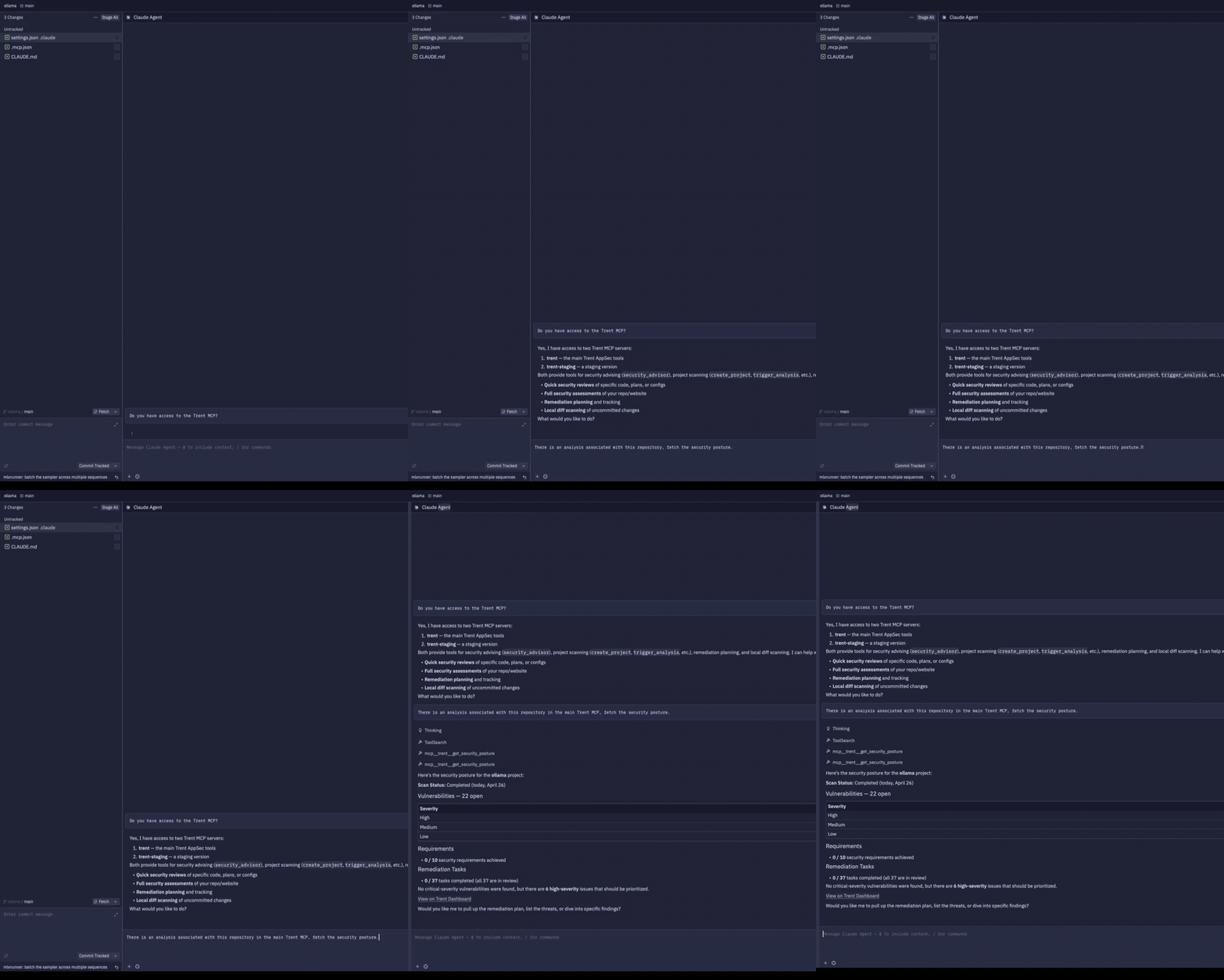
Trent builds a prioritized remediation plan with concrete mitigations. These feed directly into Claude Code’s plan, so the fixes become tasks that Claude Code implements alongside your developer.

As you build, Trent continuously tracks how your application’s security posture evolves, so each coding session leaves the project more secure than the last. You can also investigate how changes on just design documents will impact your security posture, so you start securing your application even before the first line of code is written.

Set Up Once. Security Runs Continuously.

Set up a Trent account and install Trent’s MCP server into your Claude Code configuration.

Run security assessments directly in Claude Code. Provide context about your application: what it does, who uses it, what your security requirements are. Point Trent at design documents, product specs, or compliance requirements to sharpen the analysis.

The remediation plan feeds directly into Claude Code’s task system, where Claude Code implements the fixes as part of your normal development flow. As your codebase evolves, Trent continuously re-assesses, ensuring new features and changes don’t introduce new threats.
Works Inside Your Workflow




Security Becomes Part of How You Build, Not Something You Check After.
As your codebase evolves, Trent continuously re-assesses. New features and changes don’t introduce new threats.
FAQs
How is this different from Semgrep or Snyk?
Tools like Semgrep or SonarQube are already helping with low-level vulnerability scanning: catching CVEs, flagging insecure dependencies, spotting known code patterns. But that’s not the same as understanding whether your entire application is actually secure and what needs to be done to make it secure. Trent assesses your application’s architecture in context of your business requirements.
How secure is Claude Code?
Claude Code itself is built with security in mind, local execution, sandboxing, permission controls. That raises a different question though: is what you’re BUILDING with Claude Code secure? Trent assesses your application, not the tool.
How does Trent connect to Claude Code?
Through an MCP (Model Context Protocol) connection. Install Trent’s MCP server into your Claude Code configuration. From there, you can run security assessments directly in Claude Code, and the remediation plan feeds directly into Claude Code’s task system.
Can I assess design documents before writing code?
Yes. You can point Trent at design documents, product specs, or compliance requirements to sharpen the analysis. You can investigate how changes, small or big, on just design documents will impact your security posture. That way you start securing your application even before the first line of code is written.
What happens as my codebase evolves?
As your codebase evolves, Trent continuously re-assesses, ensuring new features and changes don’t introduce new threats. Security becomes part of how you build, not something you check after you’re done.